Only individuals, qualifying estates, and qualifying revocable trusts that made a section 645 election can actively participate in a rental real estate activity. 1065 federal tax form Estates (other than qualifying estates), trusts (other than qualifying revocable trusts that made a section 645 election), and corporations can’t actively participate. Limited partners can’t actively participate unless future regulations provide an exception.

Box 9c. Unrecaptured Section 1250 Gain
- The election to either amortize or capitalize startup or organizational costs is irrevocable and applies to all startup and organizational costs that are related to the trade or business.
- The IRS can impose fines of $220 USD per partner per month, up to 12 months maximum.
- Use code G to report recapture of any other low-income housing credit.
- Figure the adjustment for line 17a based only on tangible property placed in service after 1986 (and tangible property placed in service after July 31, 1986, and before 1987 for which the partnership elected to use the General Depreciation System).
- Go to /Taxpayer-Rights for more information about the rights, what they mean to you, and how they apply to specific situations you may encounter with the IRS.
A foreign partnership with U.S. source income Certified Public Accountant isn’t required to file a return if it meets the following requirements. To make the QJV election for 2024, jointly file the 2024 Form 1040 or 1040-SR with the required schedules. This generally doesn’t increase the total tax on the return, but it does give each spouse credit for social security earnings on which retirement benefits are based, provided neither spouse exceeds the social security wage base limitation. For expert assistance in navigating the complexities of Form 1065 and optimizing your partnership’s tax strategy, contact us!

Tennessee State Tax Rate & Return Complete Guide

If the partnership has more than one trade or business activity, identify on an attached statement to Schedule K-1 the amount of section 179 deduction from each separate activity. A partnership can elect to expense part or all of the cost of certain property the partnership purchased during the tax year for use in its trade or business (including certain rental activities, if the renting of the property is the partnership’s trade or business). 946 for a definition of what kind of property qualifies for the section 179 expense deduction and the Instructions for Form 4562 for limitations on the amount of the section 179 expense deduction. Enter on line 3a gross income from rental activities other than those reported on Form 8825. Include on line 3a gain (loss) fromForm 4797, line 17, that is attributable to the sale, exchange, or involuntary conversion of an asset used in a rental activity other than a rental real estate activity. The sum of the amounts shown on the lines in item L above the line for ending capital account must equal the amount reported on the line for ending capital account.
Explore the Lili platform with a guided tour
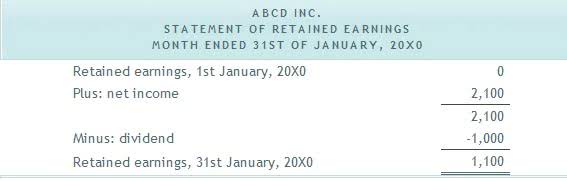
Conversely, a final return informs the IRS that you’re winding down. Its entries for assets and liabilities are populated according to the books of the partnership. As with any balance sheet, the difference between the assets and liabilities effectively reflects the partner’s capital accounts (i.e., equity in the partnership). QuickBooks Accountant The Importance of Accurate Tax Forms Accurate tax forms are the foundation of your tax…
- Digital assets are any digital representations of value that are recorded on a cryptographically secured distributed ledger or any similar technology.
- The depreciable period ends on the later of 10 years after the property is placed in service or the last day of the full year for the applicable recovery period under section 168.
- Costs for issuing and marketing interests in the partnership, such as commissions, professional fees, and printing costs, must be capitalized.
- Partners may agree to allocate specific items in a ratio different from the ratio for sharing income or loss.
- The partnership generally elects to deduct startup or organizational costs by claiming the deduction on its return filed by the due date (including extensions) for the tax year in which the active trade or business begins.
- If the return is for a fiscal year or a short tax year, fill in the tax year space at the top of each Schedule K-1.
State Hybrid and Electric Vehicle Tax Credits Explained
- You may be able to deduct these expenses currently or you may need to capitalize them under section 263A.
- Partners must include information about their company’s profits or losses, deductions, and taxes and payments on the form.
- Partnerships must report their total income and deductible expenses.
- Thus, a partnership’s ultimate members will be partners holding a direct interest in the partnership, partners holding an interest in an upper-tier partnership, or shareholders in an upper-tier S corporation.
Complete and attach Form 4562 only if the partnership placed property in service during the tax year or claims depreciation on any car or other listed property. See section 263A(a) for rules on capitalization of allocable costs (including taxes) for any property. Don’t include salaries and wages reported elsewhere on the return, such as amounts included in cost of goods sold, elective contributions to a section 401(k) cash or deferred arrangement, or amounts contributed under a salary reduction SEP agreement or a SIMPLE IRA plan. Any costs not deducted under the above rules must be amortized ratably over a 180-month period, beginning with the month the partnership begins business.
- The codes needed for Schedule K-1 reporting are provided for each category.
- If there’s more than one type of expenditure or more than one property, provide the amounts (and the months paid or incurred if required) for each type of expenditure separately for each property.
- Use Form 8866, Interest Computation Under the Look-Back Method for Property Depreciated Under the Income Forecast Method, to report any such interest.
- We last updated Federal Form 1065 in January 2025 from the Federal Internal Revenue Service.
- A nominee who fails to furnish all the information required by Temporary Regulations section 1.6031(c)-1T when due, or who furnishes incorrect information, is subject to a $330 penalty for each failure.
Leave a Reply